Update, October 2026: this is an archived story from the COVID-19 period. Mongolia has no COVID-related entry rules today. For current entry requirements read our Mongolia visa guide.
2020 reshaped Mongolia: the country sealed its borders against COVID-19 before recording a single local case, re-elected the Mongolian People's Party, adopted the 30-year Vision 2050 strategy, left the FATF grey list, and announced the discovery of Luut — the ancient Xiongnu capital. Here is our review of that year, kept as a historical record.
Planning a trip today? Mongolia is fully open — see our Mongolia visa-free entry guide and our report on how Mongolia's borders reopened.
Mongolian Economy
After about a decade of positive economic growth, Mongolia's economy contracted sharply in 2020 as the pandemic hit commodity exports and domestic activity. The ADB and IMF both revised Mongolia's growth projections down repeatedly during the year, after growth of around 5% in the years before the pandemic.
Fitch projected that Mongolia would run a budget deficit of several percent of GDP in 2020, while general government debt remained high at around 70% of GDP (IMF forecasts, April 2020). Despite the contraction, Mongolia's long-term fiscal position was viewed as manageable thanks to its mineral wealth.
Mongolia went ahead with its parliamentary election on 24 June 2020, making it one of the relatively few countries that did not postpone a national vote during the pandemic.
After the first outbreak of the coronavirus in Wuhan, Mongolia became one of the first countries to close its border with China, announcing the closure on 27 January 2020. It restricted crossings from Russia soon after, in February 2020, and kept tight border controls in place for the rest of the year.
In the first half of 2020, the amount of coal exported from Mongolia to China fell to almost half the level of the previous year as border crossings slowed, before recovering somewhat later in the year. Coal remains Mongolia's single largest export earner, which is why the border disruptions hit the economy so hard.
COVID-19 in Mongolia
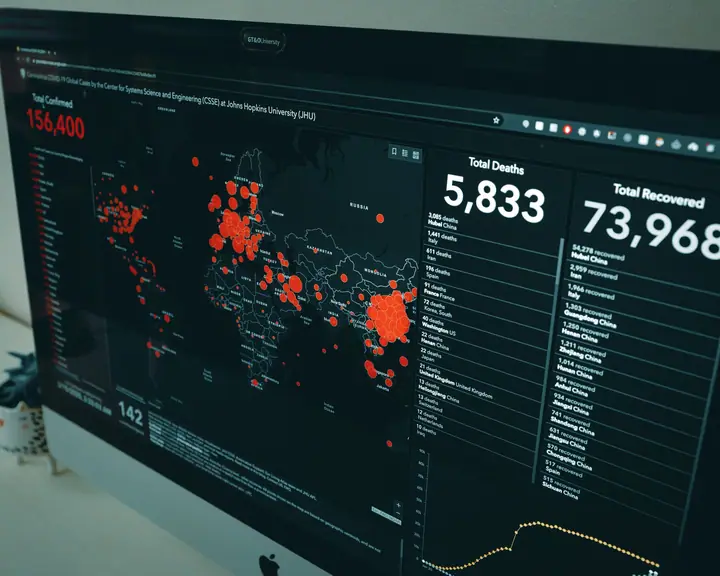
To combat COVID-19, Mongolia introduced strict nationwide precautions for the first time to stem the spread of the virus. The country's first confirmed case, in March 2020, was an imported one — a French national who had entered from abroad. Mongolia took early action against imported cases following the notification of an outbreak in China and introduced restrictions on the entry of foreigners.
Because the borders were closed and public activities restricted, no local transmission was detected for roughly ten months. The first case of local transmission was recorded in November 2020, involving a driver of international freight who had completed his 21-day quarantine, and his wife.
From that day on, the country entered a strict lockdown and a heightened level of preparation. As the outbreak eased somewhat, the strictest closures were gradually lifted from 19 December.
Faced with disruption to businesses' livelihoods, the government decided to exempt households and businesses from electricity, heating, water and waste charges. During the COVID-19 pandemic, Mongolia also returned about 21,000 citizens from 80 countries on charter flights.
Parliament election in Mongolia

In the June 2020 parliamentary election, the ruling Mongolian People's Party (MPP) won a second consecutive landslide, taking 62 of the 76 seats in the State Great Khural. The Democratic Party won 11 seats, with the remaining seats going to smaller parties, a coalition and an independent candidate.
In the local elections held in October 2020, the MPP also won a clear majority in the Ulaanbaatar city council — 34 of the 45 seats — and in most provincial assemblies across the country.
Archaeologists discover ruins of the Khunnu empire capital
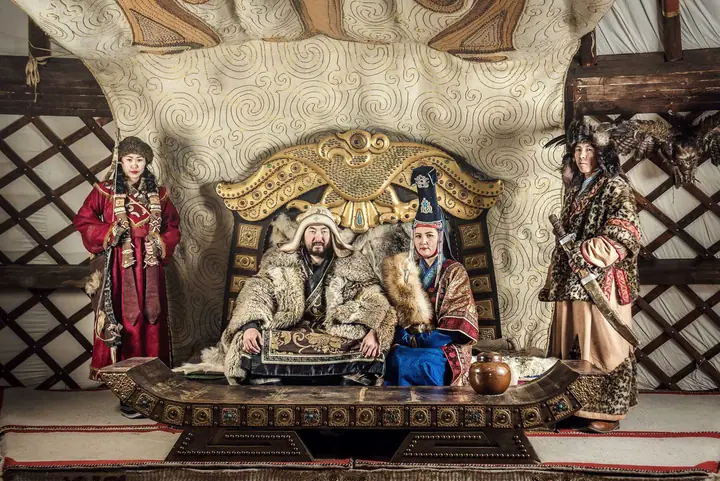
In July 2020, a team of archaeologists led by T. Iderkhangai announced that ruins excavated in Ölziit soum, Arkhangai Province, had been identified as Luut — the 'Dragon City' (Longcheng) — a capital of the Khunnu (Xiongnu) Empire and one of the most important ancient cities in Mongolia.
The identification rested on finds from several seasons of excavation, most notably a roof-tile fragment carrying an inscription referring to the 'Son of Heaven, Chanyu' — the title of the Xiongnu ruler. Such decoration would not have been used on an ordinary building, which pointed to a palace of imperial rank and helped confirm the site as the Xiongnu capital.
Mongolia’s development model - ‘Vision-2050
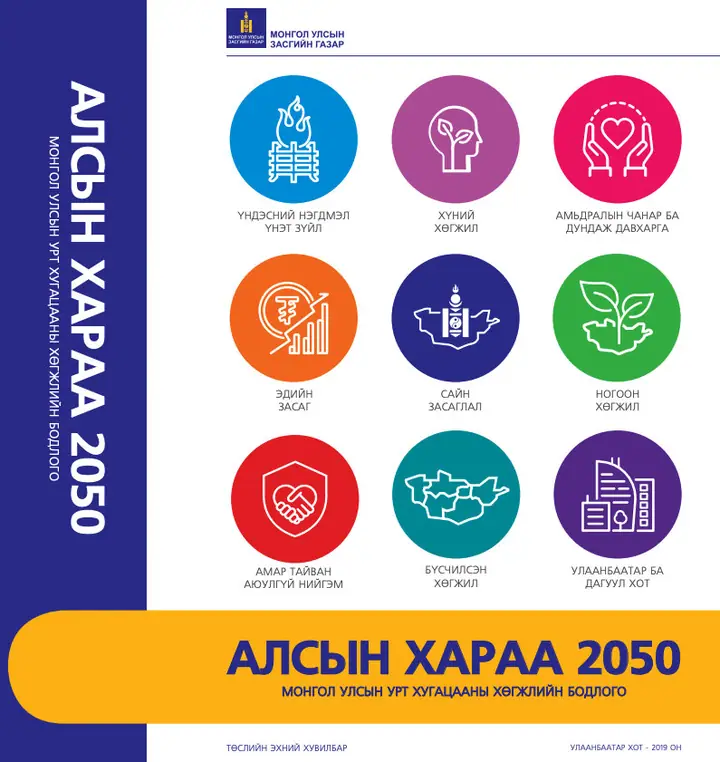
On 13 May 2020, the State Great Khural adopted "Vision 2050", a strategy paper defining the next 30 years of Mongolia's development. The document, developed over eight months by government ministries together with academics and regional and international partners, includes more than 500 strategies and measures.
In this sense, Vision 2050 is a distinctly Mongolian model of development, combining internationally pursued development goals with Mongolian traditional values alongside respect for human rights and the rule of law. It is organised into nine fundamental goals, broken down into targets with delivery methods and expected outcomes for the government.
In the past, Mongolia's economy was largely dependent on mining, and it still is: mining generates the bulk of export income, so changes in commodity prices have a direct impact on the country.
Vision 2050 aims to change that by prioritising a knowledge economy: it names the sectors, areas and projects that will be given priority within the economy and supported by public policy over the next 30 years.
The plan foresees Mongolia becoming a producer and exporter competitive in the Asia-Pacific region, with the measures intended to add roughly 2.5–3 percentage points to GDP growth per year.
The strategic partnership strengthens between Mongolia and the U.S.
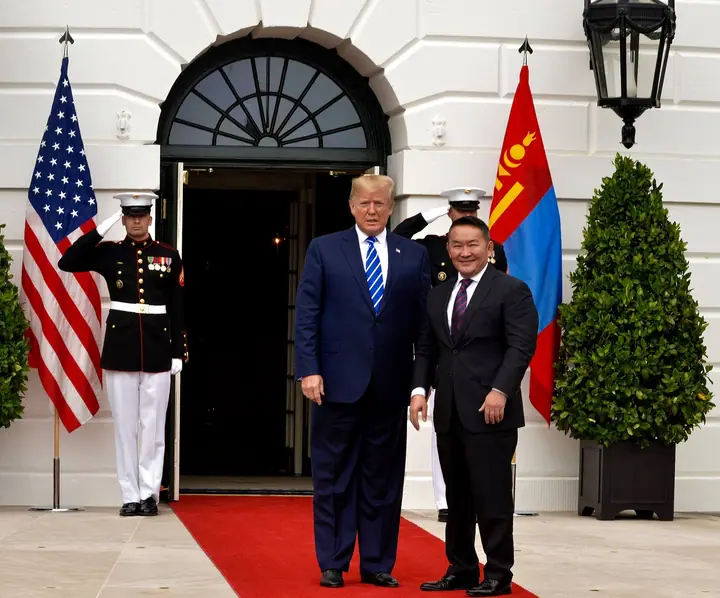
On December 7, the US House of Representatives passed a resolution reaffirming the US strategic partnership with Mongolia. The resolution underlines the importance of deepening economic ties between the two countries in order to enhance cooperation in the fields of peace, security and economic development.
It also calls for support for female entrepreneur-led SMEs, for boosting trade between Mongolia and the US, and for support for efforts to promote democracy and fight corruption in Mongolia.
Recalling the importance of civil society for the development of democracy, the resolution also encourages Mongolia to continue to maintain a free, fair and trustworthy electoral system, implement legal reforms, build institutional capacity and strengthen judicial independence. Observers believe it will play an important role in the development of relations between the two countries.
Mongolia removed from FATF Grey List
In October 2020, Mongolia was officially removed from the Financial Action Task Force (FATF) 'grey list' of jurisdictions under increased monitoring for money-laundering risks.
Mongolia had been added to the grey list in October 2019 over gaps in its anti-money-laundering and counter-terrorism-financing controls. After the government completed its action plan — one of the fastest turnarounds among listed countries — the FATF plenary confirmed the delisting in October 2020, a boost for Mongolia's banking sector and foreign investment climate.